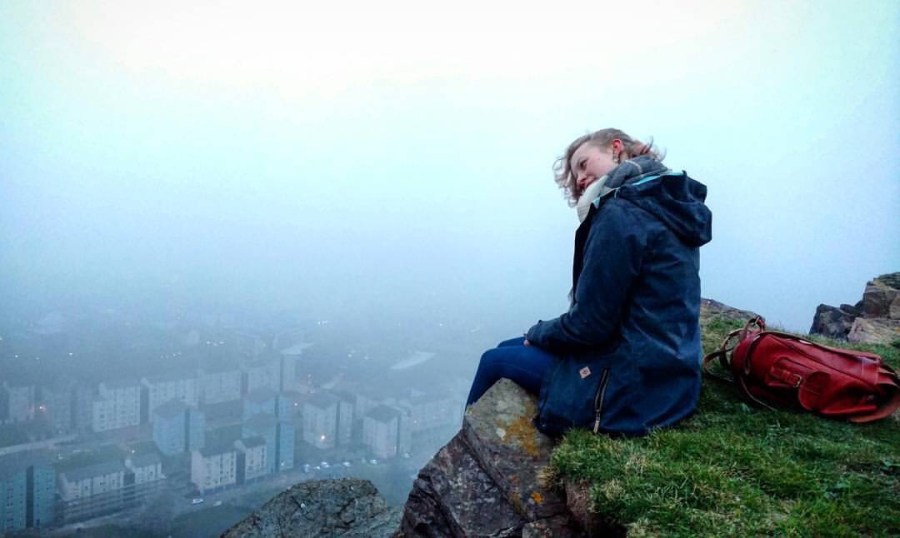
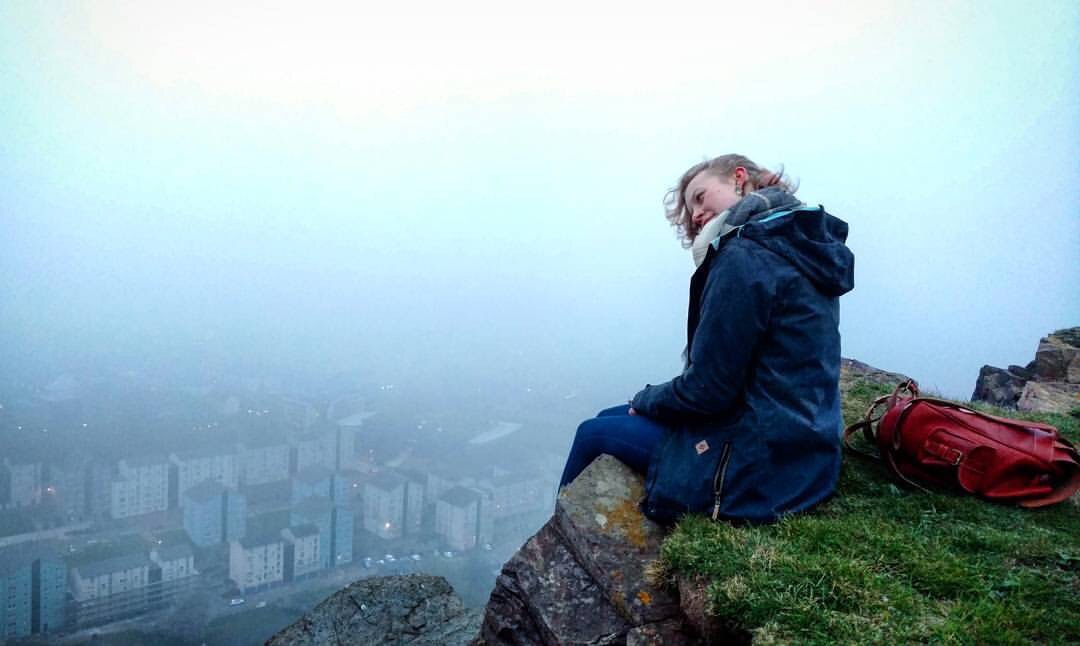
There is a word in this part of the world for a cloud that settles over the land along the sea in summer. When April arrives in Scotland, so too does a dense and impregnable fog that clings to the tops of hills and crags and nestles in the boughs of trees. Buildings become invisible, and people become anonymous as Edinburgh becomes enveloped in the ample shrowd they call the Haar.
It wound its way around the city the day that we arrived here by train from Manchester, cool and still, stirred up by our footsteps and watching from the hillsides quietly. There were scattered rain drops and the regular moans of wind as we rode out of the city and into the neighboring town of Rosewell to bed down for the night. Twenty four hours of travel, strangers in another land, weary of sitting, and unwilling to stand, we ate around a table for the first time in our new homeland, planned for the following day, and readied ourselves for bed. A new start would soon follow with the dawn of a new day.
It is exactly one month to the day that I have now been in the City of Edinburgh, and in that time, the streets are no longer strangers, the roads seem no longer reversed, the accents, the culture, the money, and my thoughts have all set in and become familiar once again. And the thick rolling fog this city is famous for has poured itself out only a handful of times since our arrival. In fact, most days it’s hardly more than a mild haze that drapes itself over the castles and towers like a fine, diaphanous veil, apparent in the sunlight but fleeting as a thought.
Yet the nature of the Haar is very much like the nature of my God. And as dense and unsearchable as my God can often seem, in that mystery He is only ever good, and He delights for Himself to be revealed.
Two years ago, I committed to live in a place I had never been and to love a people I had never known. I never heard a yes; I never heard a no. I only felt a hand hold my heart in the center of my chest and whisper, “choose.” And I did. Despite never having lived apart from my family and never having been outside my country of birth, I made a choice that has marked me, I think, forever.
In the mystery and doubt about what would follow after, I told the Father of Heaven, “You have my yes until you tell me no.” Little did I know that my yes would have to stand the test of time and the sorrow of leaving. It seemed at the time to be the only logical choice–and still does, I think. But what is sound is not often easy, and what is easy is rarely ever sound.
In the subsequent two years, I fell in love with the place I call home. Colorado: its people, its mountains and deserts, its coarse landscape, and turbulent weather are captivating. It is so extreme in its way of life and sense of adventure, its schools of thought, and its state of mind that a year before my departure, I confess that I regretted my unapologetic yes to my God, and I wished instead I had chosen to remain. He did, after all, offer me the choice.
Here, I thought, is home. Here is the place where I’ve grown the most. Here is where I’ve become best known. Here is where I live, breathe, work, eat, minister, create, adventure, and rest. This is my tribe, my people, and my heart. This is the thing we search for our whole lives and rarely ever find–fight to gain and defend to keep.
And this one thing brings me back to the Haar.
Is not the thing we seek to gain most in this life, the very thing God calls us to surrender when we come to him?
Is not the beginning of the Gospel the end of your life? And mine? Isn’t the Word true when Paul says, “I have been crucified with Christ (given a sentence of death); it is no longer I who live, but Christ lives in me; and the life which I now live in the flesh I live by faith in the Son of God, who loved me (when I was yet estranged) and gave Himself for me (without regard for my condition),” (Galatians 2:20, with notes)?
Didn’t Jesus say, “For whoever wants to save his life will lose it, but whoever loses his life for my sake will find it,” (Matthew 16:25)? Or as one of my dearest friends has continually reminded me, isn’t it also written, “Assuredly, I say to you, there is no one who has left house or brothers or sisters or father or mother or wife or children or lands, for My sake and the Gospel’s, who shall not receive a hundredfold now in this time…and in the age to come, eternal life,” (Mark 10:29-30, abridged)? But if I do not lay them down, I am called unworthy of him.
So despite myself and without ellaborating much on the details, I plunged into an eight month season of the soul that was swallowed up in something like the Haar.
Our move here was postponed, I lost a loved one to cancer, nearly lost my job, lacked the finances and the faith required to forge ahead, sacrificed dreams, lost touch with friends, and found myself facing every old emotional wound and savage scar I reckoned dead at the cross. Surrounded by people but feeling alone, stripped down, hollowed out, having the appearance of a man but feeling like a boy, as the time dragged on, increasingly I found myself inadequate for the task to which I gave my flippant yes. If anyone knew my struggle, I was unaware.
For so long, I considered myself the happiest person I knew–and I do again today. I was utterly unaquainted with sadness and hadn’t had a bad day in years. But it was this self-assurance, I think, that lulled me into leaning on my own understanding instead of the Lord’s and relying on the joy of my everyday instead of the joy of my Everything, Jesus Christ.
All my old insecurities, fears, and failures crept into the arena of my mind, along with my adversary, the accuser. But it was in that battlefield that so too stepped the God of the Haar.
Our God is not just the God who dwells in unapproachable light (1 Timothy 6:16). Nor is he only the all-consuming fire (Hebrews 12:29).
He is a God who has cloaked himself in mystery and rests within the cloud.
There is a place in the book of Exodus where God’s children are caught between an army and the sea. On the one hand, they face the sword and the spear, and on the other, the crushing depths. And in their despair, they cried out against Moses and the Lord, but the God of Heaven moved on their behalf in the Cloud. Moses said to the people, “Do not be afraid. Stand still, and see the salvation of the Lord, which He will accomplish for you today. For the Egyptians whom you see today, you shall see again no more forever. The Lord will fight for you, and you shall hold you peace,” (Exodus 14:13-14).
And when Moses raised his staff, the cloud that shaded God’s Children by day came between their enemies and them, and the Angel of the Lord, Jesus Christ, gave light to Israel and darkness to their adversary, Egypt, who once held them in captivity. And then He made a way for them through the waters until they arrived on the shores of another country and found themselves free.
And again, God called to Moses and the Elders of Israel in Exodus 24 to come up the mountian side and meet with Him in the Cloud. And there, in the profound and overshadowing mystery, they feasted at a table prepared for them with the Lord. It was in the Cloud that they saw God and yet beholding him, they did not die. This same cloud would later overcome the priests of the temple with power so that they could not stand up under it (1 Kings 8 and 2 Chronicles 5) and filled the House of God with smoke in the days of Isaiah (Isaiah 6) . It was from within a cloud that a voice spoke in Matthew 17, saying, “This is My beloved Son, in whom I am pleased. Hear Him!”
And from that cloud stepped the Son of God, the savior of Man, revealed in the fullness of time, high and lifted up–transfigured from the image of mortal flesh into the glory of a victorious and immortal King.
It is the cloud, the fog, the Haar from which God has chosen to reveal himself to man–and to me.
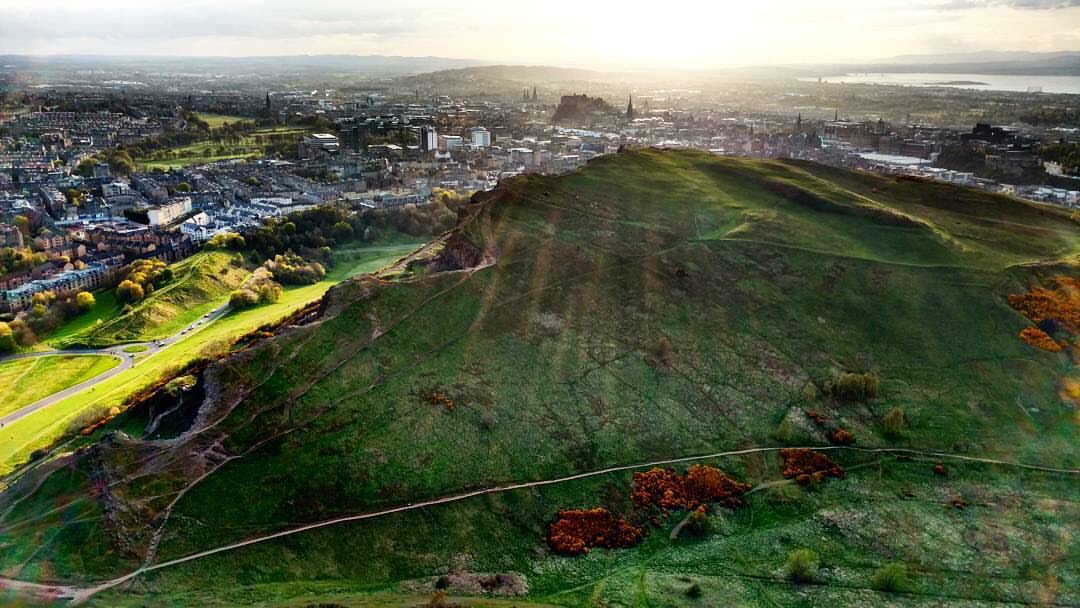
As I sit and write this, staring out the window of my new home at a perfectly blue sky, in the full light of day, I see just how precious the veil of Edinburgh truly is. For the Haar does so much more than simply hide the city and its people from the summer sun. It also waters the earth and softens the ground we plant in.
And when it’s blown back and gives way to the sky, it exposes this singular, profound thing: that everything covered in the heart of the Haar is given new life when the light of the sun is revealed.
And it’s then that I fail to see how I could ever have said no to stepping into such unimaginable glory.
Indeed, I have fallen in love with the God of the Scottish Haar. And I have never been happier than to dwell with him in the mystery of what I have yet to see.

 ichosetheone